Piston Soak / Chemical Treatment
£200–£400Chemical treatment to dissolve carbon on rings — not a permanent fix.
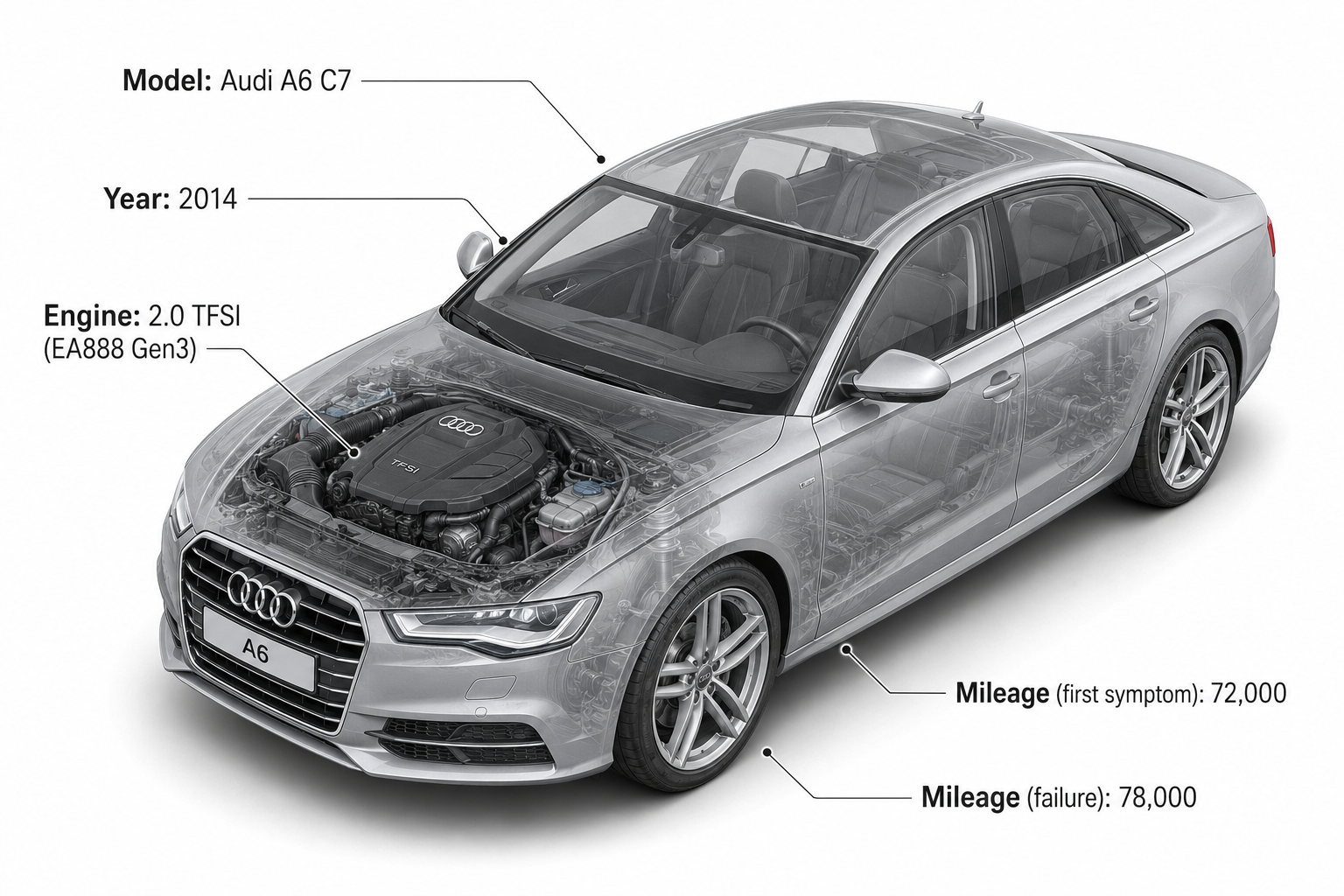
A premium visual breakdown of how a 2.0 TFSI EA888 went from carrying oil in the boot to blue smoke, MOT failure, and a specialist piston-ring rebuild.
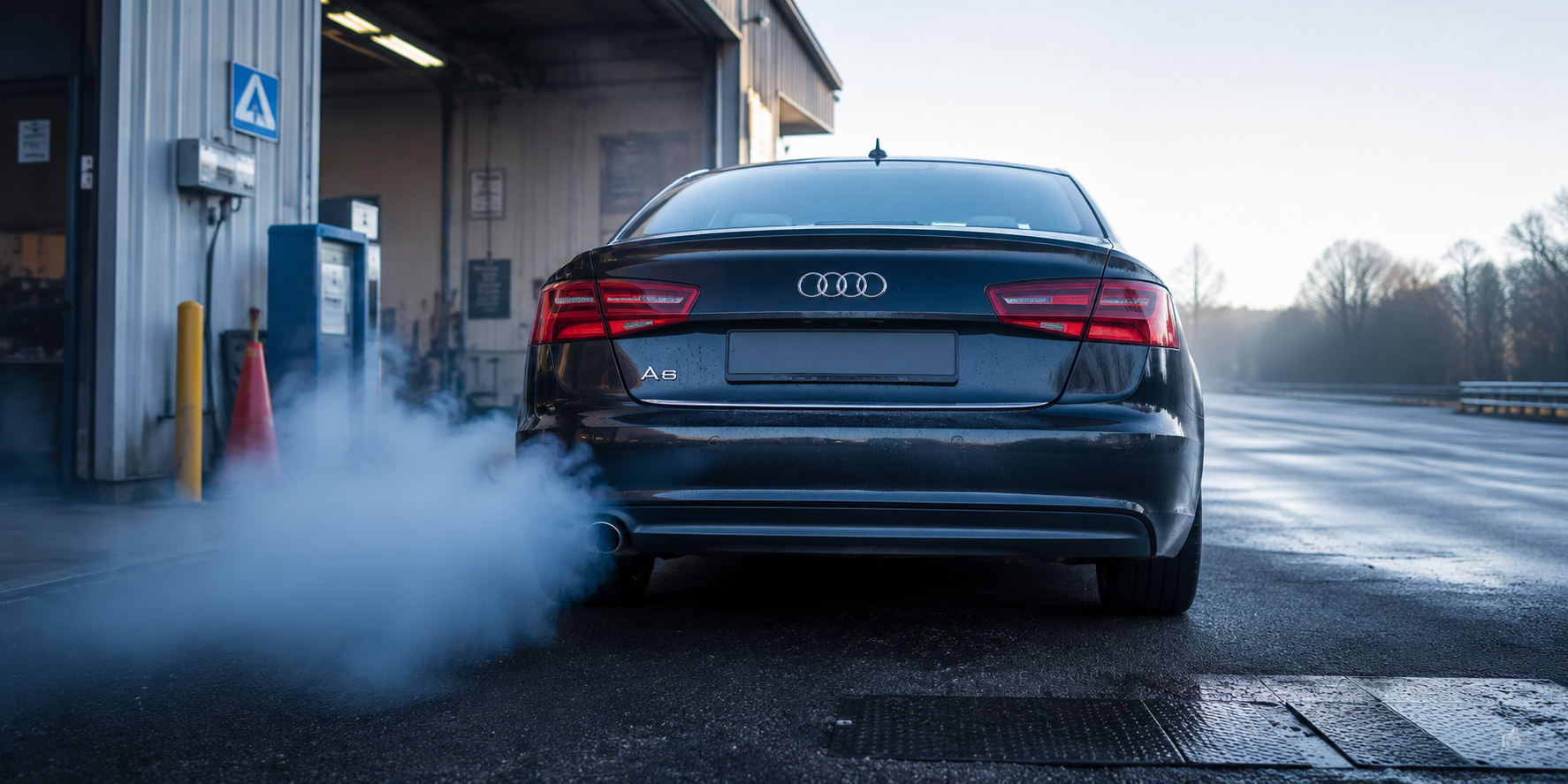
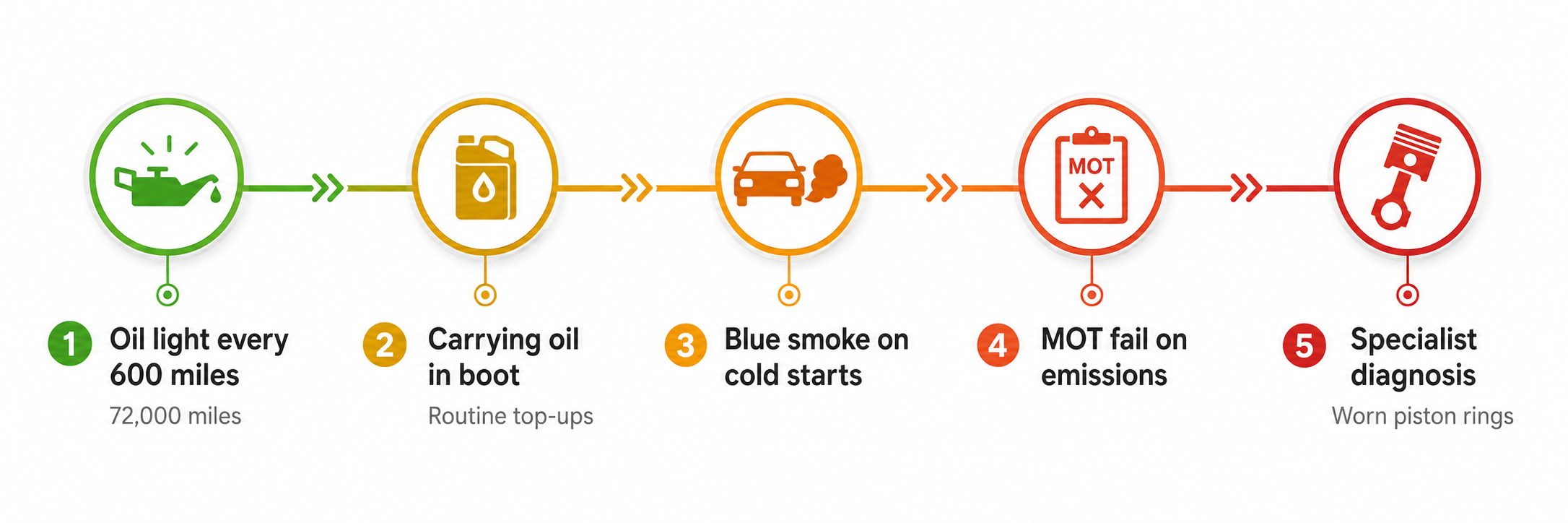
At 72,000 miles the owner noticed the oil warning light every 600 miles. Adding a litre became routine. Blue smoke puffed from the exhaust on cold starts. The MOT tester flagged excessive oil consumption and emissions failure. Within 6,000 miles the car was undriveable without a boot full of oil.

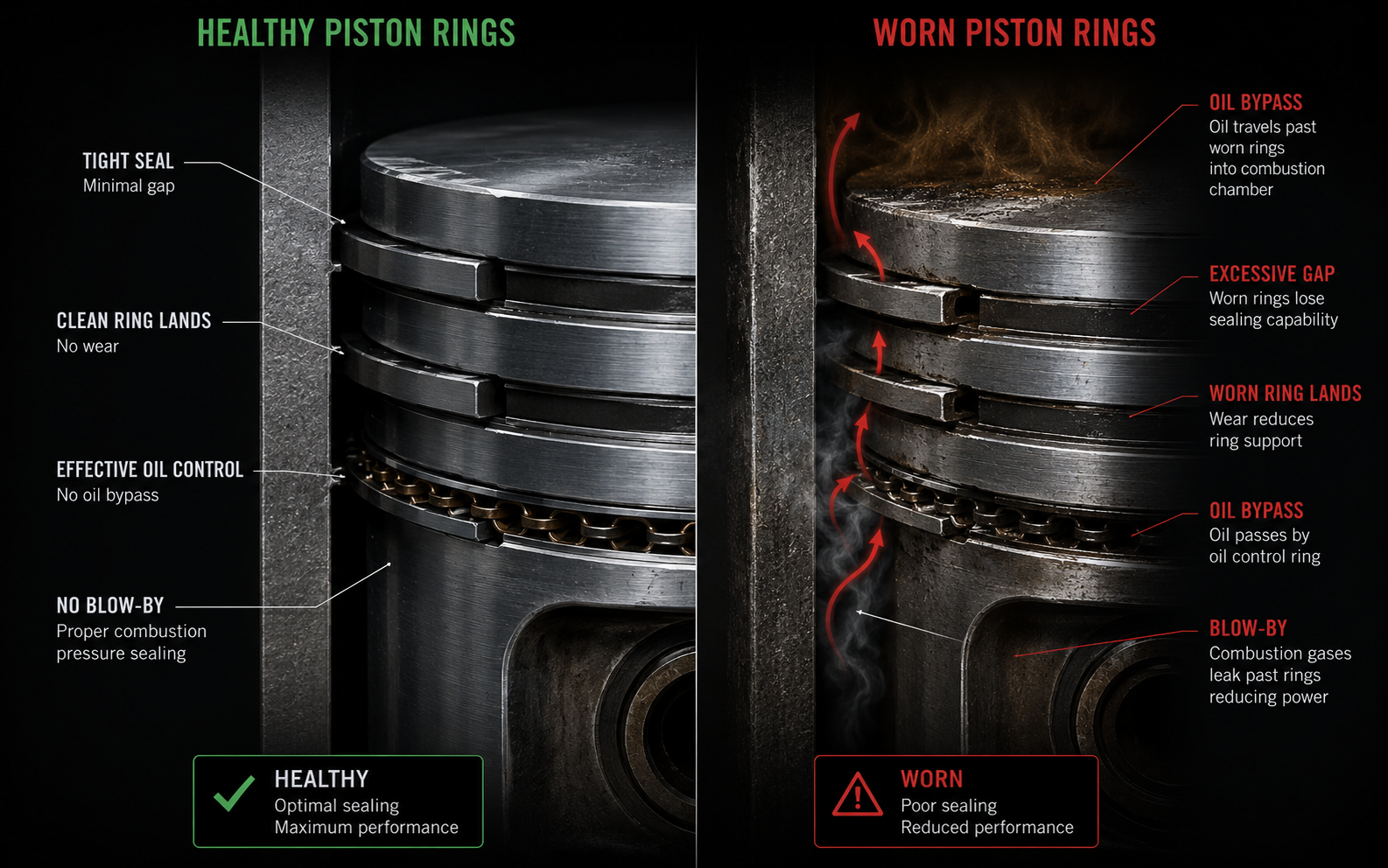
The owner dismissed it as normal — until blue smoke appeared on cold starts and the MOT tester failed the emissions. The EA888’s piston rings were allowing oil to bypass into the combustion chamber.
This case is a classic pre-catastrophic EA888 piston-ring failure: the engine had not suffered valve damage yet, but it was close.
Oil warning light every 600 miles became blue smoke on cold starts and MOT emissions failure within 6,000 miles.
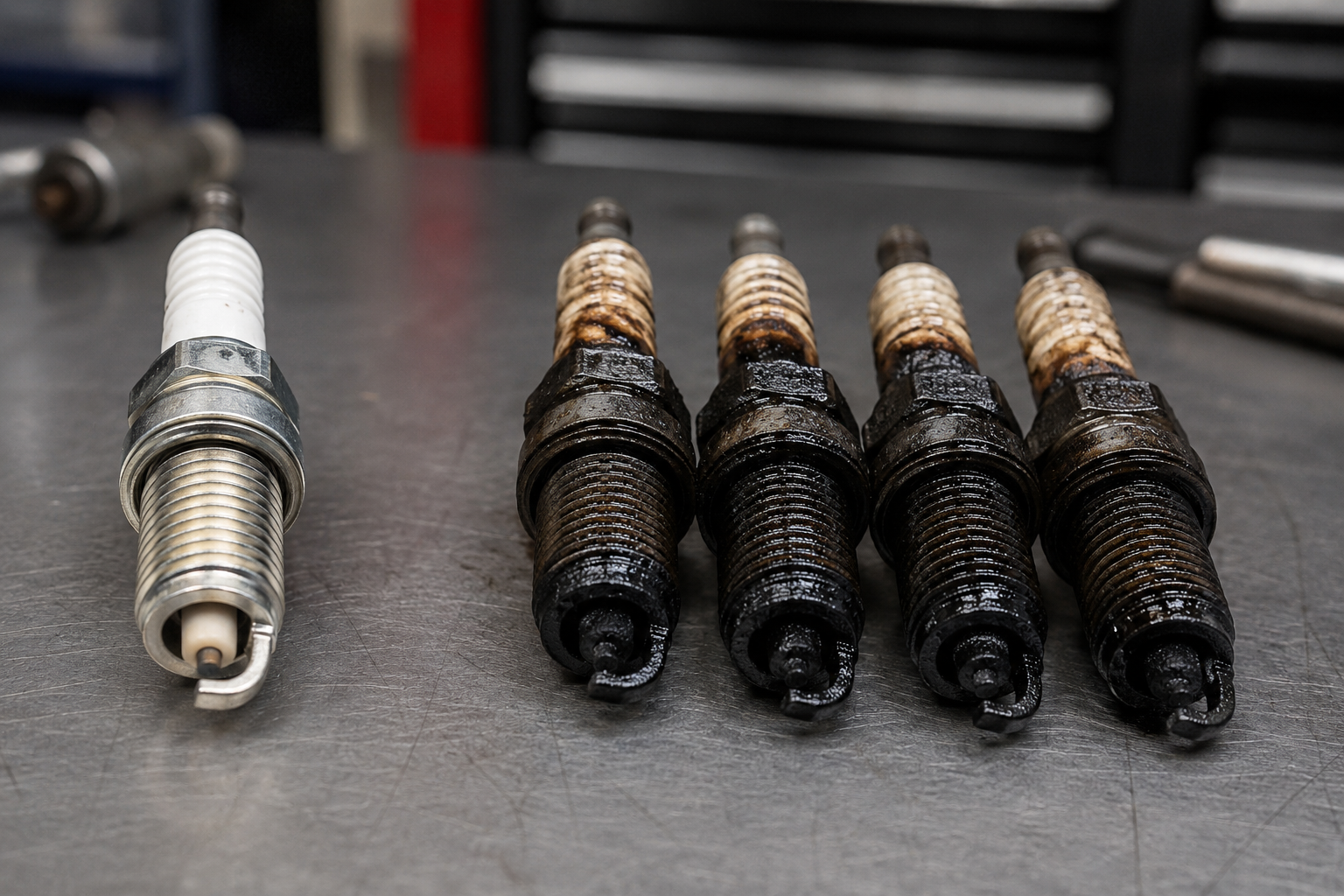
Piston rings wore, oil bypassed into the combustion chamber, carbon fouled the plugs and cat, and emissions worsened.
“I nearly did the piston soak. The garage said it might help for a few months. But I’d have wasted £400 and still needed the rebuild. Just do it properly once.”
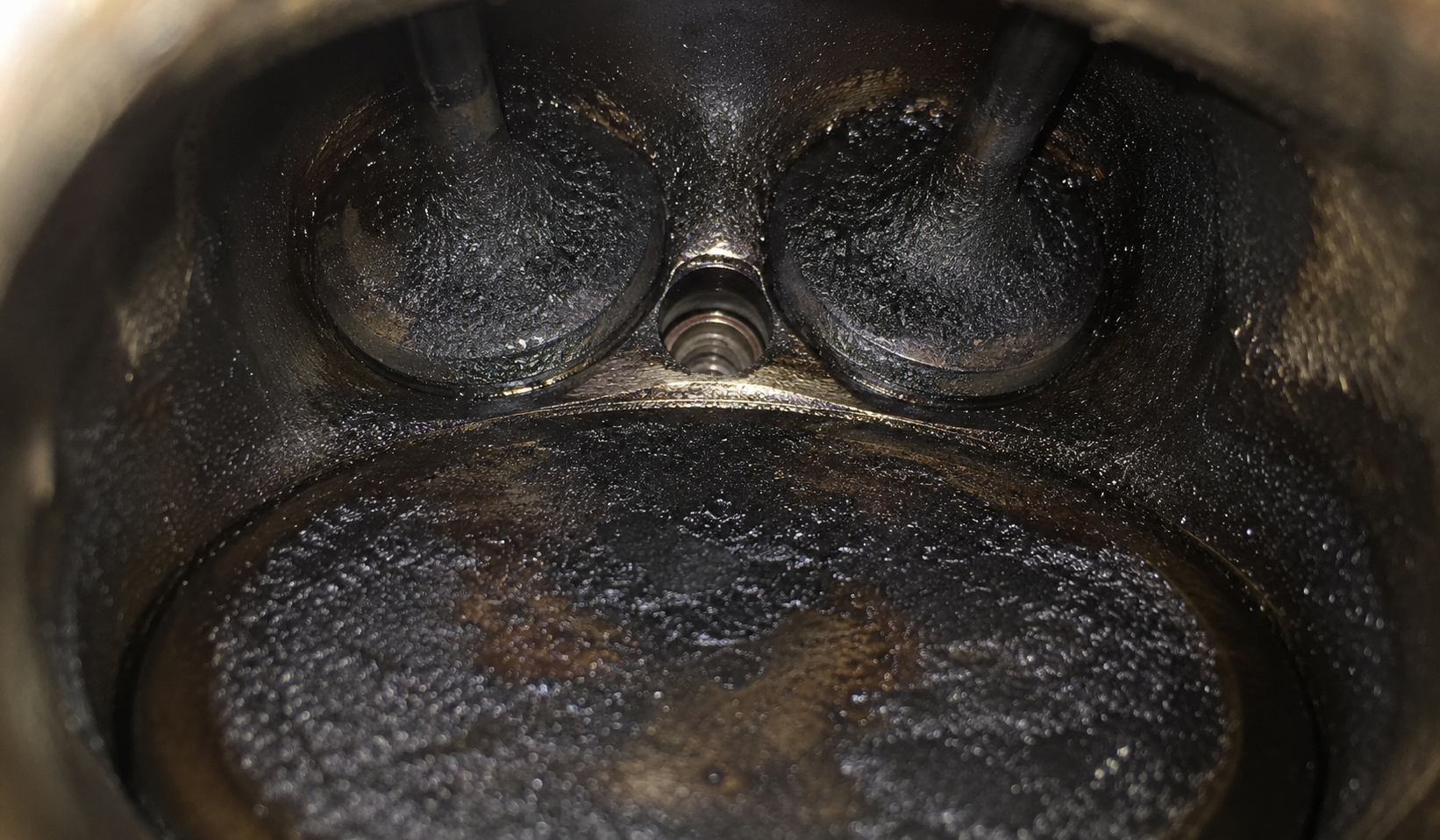
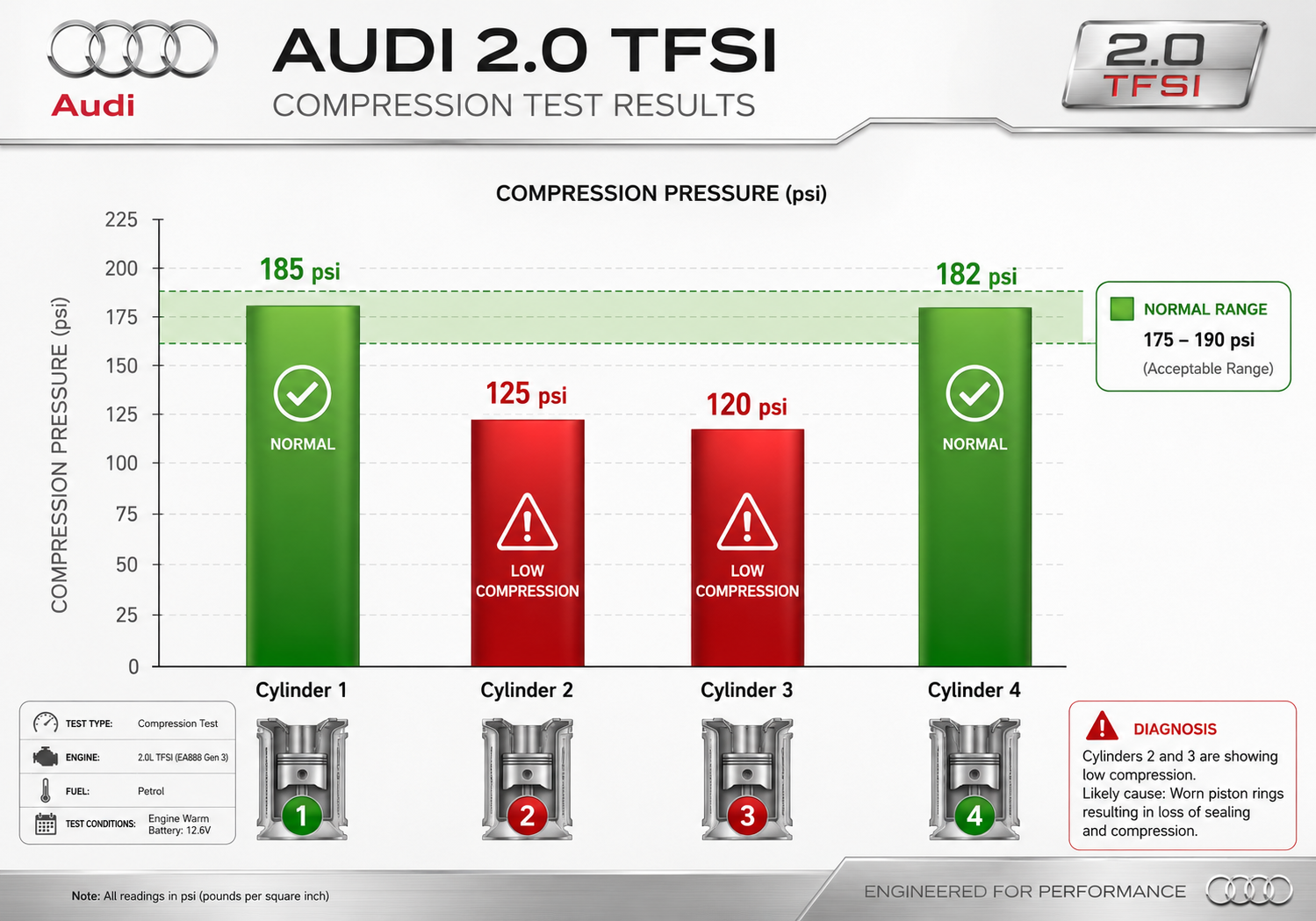
The VAG specialist performed a compression test and borescope inspection. The findings were clear: worn piston rings, oil fouling, and hardened valve stem seals.


“The piston rings are worn. Oil is getting past them into the combustion chamber. That’s why you’re burning a litre every 600 miles and failing emissions. A piston soak won’t fix this — you need new rings.”
Compare the routes the owner faced after diagnosis. The specialist piston-ring rebuild is selected by default because that was the chosen route.
Chemical treatment to dissolve carbon on rings — not a permanent fix.
New piston rings, valve stem seals, timing chain, tensioner, gaskets — permanent fix.
Fully reconditioned EA888 long engine with new rings, seals, timing components.
Brand new Audi crate engine — dealer policy for severe internal failure.
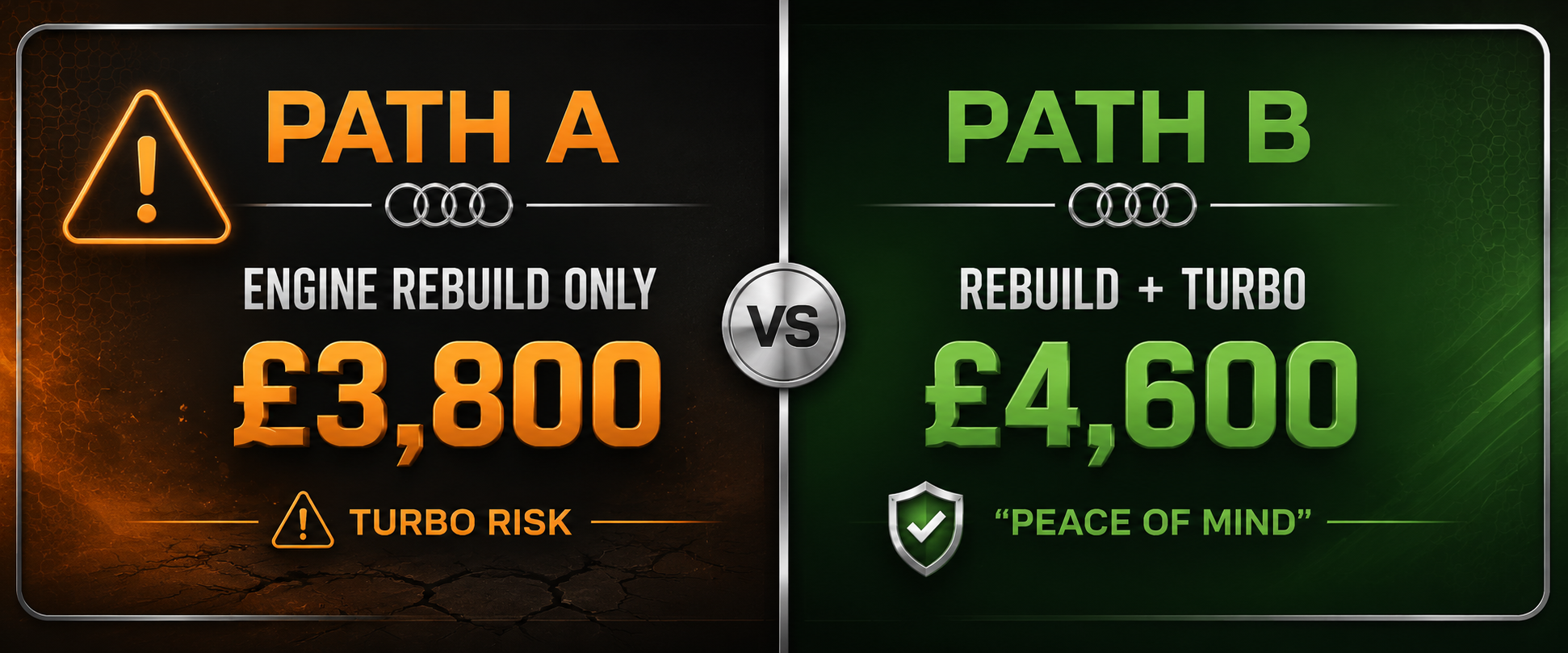
With worn rings and carbon buildup, the specialist could not fully know whether the turbocharger bearings or timing chain tensioner had already been affected without deeper disassembly.
Rebuild only — new rings, valve stem seals, timing components.
£3,800If turbo fails later: add £800–£1,500 + labour.
Replace turbo preventatively at the same time.
£4,600Higher upfront cost, but significantly reduces post-rebuild turbo failure risk.

The vehicle was worth approximately £8,000–£12,000 before failure. A £3,800 rebuild represented ~30–45% of vehicle value — expensive but viable for a well-maintained example.

Sell as spares/repair. A 2014 A6 C7 with oil consumption issues is worth £2,000–£4,000.
£200–£400 — not a permanent fix.
£3,800 total. New rings, seals, timing components with upgraded parts.
The owner responded after the MOT failure, before timing jumped catastrophically. A specialist could still repair the existing engine.
Pre-failure value set the ceiling for viable repair spend.
£3,800 specialist rebuild was around 30–45% of the car’s value.
Owner planned to keep the car long enough for warranty to matter.
Car needed to pass emissions for road use — repair was necessary, not optional.
Told it was temporary at best — decided against wasting £400 on a short-term fix.
Specialist rebuild — new rings, seals, timing components — versus £6,000+ dealer route.
The decision balanced vehicle value, dealer pricing, early detection, and emissions-compliance necessity without paying for a full dealer crate engine.
Six days later, the A6 was back on the road. The rebuild avoided catastrophic valve damage and gave warranty cover without dealer crate-engine pricing.
The commercial lesson is simple: piston-ring symptoms are cheaper when caught early. Waiting for blue smoke or MOT failure can push the car toward dealer-level crate-engine costs.
Oil consumption returns within weeks. Money wasted.
Oil consumption eliminated. Engine restored.
Avoid at all costs — independent rebuilds do the same job for less.
| Component | Audi/VW OEM Part Number |
|---|---|
| Piston ring set (complete) | 06K 198 151 B |
| Piston (each, if required) | 06K 107 065 K |
| Valve stem seal kit | 06K 198 049 |
| Timing chain kit | 06K 198 158 A |
| Timing chain tensioner | 06K 109 467 K |
| Upper chain guide | 06K 109 469 |
| Lower chain guide | 06K 109 507 |
| Crankshaft sprocket bolt | 06K 105 229 |
| Head gasket set | 06K 198 012 |
| Cylinder head bolt set | 06K 103 385 |
| Oil pump assembly | 06K 115 105 |
| PCV valve / oil separator | 06K 103 495 AL |
| Turbocharger (remanufactured) | 06K 145 722 K |
| Sump gasket | 06K 103 609 |
Data sources: EM-VERIFIED n=130 from EnginesMarket.co.uk 2025 internal data, workshop consensus, Auto Trader UK market data March 2025, and known failure patterns data.
Compare quotes from UK VAG specialists for piston-ring wear, blue smoke, MOT emissions failure, and full EA888 repair options.
Data sources used in the content: Engines Market 2025 internal quote data, workshop consensus, third-party vehicle market references, and known EA888 failure-pattern data.
Replace this mock form with your live lead form or Elementor shortcode.